

 by Cameo Comms
Performance PR vs Traditional PR: How Pay-for-Coverage is Changing the Game
Since we launched Performance PR, we’ve received both praise and criticism. Praise comes from clients who either:
-
Have been burned by traditional PR agencies before, or
-
Have limited budgets and want to ensure their spend generates measurable ROI.
Criticism often comes from other agencies — many have grown comfortable with the retainer model and have avoided the tough question: “What return am I getting on my PR spend?” Performance PR challenges that norm by tying PR activities directly to tangible results.
What is Traditional PR?
Traditional PR operates on a predictable model:
-
A client hires an agency for a minimum period (often 6 months)
-
Pays a monthly retainer (ranging from 8K AED to 30K AED depending on services)
-
Receives a bundle of services: copywriting, strategic counsel, account management, and media coverage
The agency’s goal is to build the client’s reputation, ensure visibility, and secure media coverage. In many cases, this approach works. But clients often struggle to measure results — leading to frustrations:
What is Performance PR?
Performance PR is a results-driven approach that links PR activities directly to measurable outcomes. Examples include:
-
Footfall for restaurants
-
App downloads for mobile apps
-
Direct leads or sales from PR campaigns
Different agencies may define Performance PR slightly differently, but at its core, it’s about moving beyond traditional metrics like impressions and media mentions to outcomes that directly impact the client’s business.
Pay-for-Coverage: PR You Only Pay For
One of the most popular Performance PR models is Pay-for-Coverage, which we offer at our agency. Here’s how it works:
-
The agency pitches the client’s news to editors
-
Clients are only billed if the coverage is secured
This model makes PR more accountable and reduces the risk for clients, ensuring they pay only for results.
Performance PR 2.0: The Hybrid Sales Model
Beyond coverage, Performance PR can generate real leads and sales. Our Performance PR 2.0 model works like this:
-
Clients pay a lower monthly fee for ongoing PR activities (copywriting, strategy, account management)
-
Additional fees are commission-based, tied to sales generated from PR campaigns
This structure incentivizes agencies to focus on outcomes. Methods may include:
-
Influencer marketing
-
Ticketed events
-
Community coupons
-
Press distribution and media outreach
The goal: turn PR efforts into measurable business results.
Key Differences: Traditional PR vs Performance PR
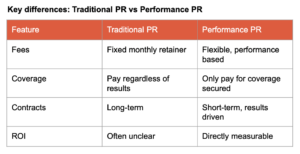
While models vary across agencies, these patterns are common in Performance PR, emphasizing accountability, results, and ROI over fixed retainer fees and uncertain outcomes.
Why Performance PR Matters
Traditional PR builds brand reputation, but it doesn’t always deliver measurable business outcomes. Performance PR bridges that gap, ensuring clients get both visibility and tangible results.
For businesses in the Middle East, this approach is still emerging, and it’s reshaping how agencies and clients work together. By aligning incentives, Performance PR guarantees that your investment translates into real business impact — whether that’s media coverage, leads, or sales.
Ready to try Performance PR?
Our pay-for-coverage and hybrid models are designed to make PR accountable, measurable, and results-driven. Work with Cameo to turn your PR investment into real outcomes. Book a call with us here.